HBS Guide
Blogs
Explore our guides to learn more about Restless Legs Syndrome, from symptoms and triggers to sleep routines and practical tips for making everyday life more comfortable.
Why do RLS symptoms worsen on some days and improve on others? Discover the effects of sleep, stress, inactivity, iron stores, and daily habits on RLS.
What is PLMD? How repetitive movements during sleep can affect sleep quality, the difference from and relationship to RLS, and options for diagnosis and management.
Keeping a diary can help you identify personal triggers and better understand the symptoms of Restless Legs Syndrome (RLS). In this article, you will find a simple RLS diary template—which takes about 10 minutes to complete—along with sample entries, allowing you to track factors such as stress, caffeine intake, prolonged sitting, late meals, your evening routine, and sleep.
During pregnancy, complaints resembling Restless Legs Syndrome (RLS) can vary depending on the day and daily habits. This article presents a practical RLS diary plan designed to help identify personal triggers and potentially soothing routines by briefly tracking factors such as symptom timing, movement and rest patterns, sleep, caffeine intake, and evening routines over a seven-day period.
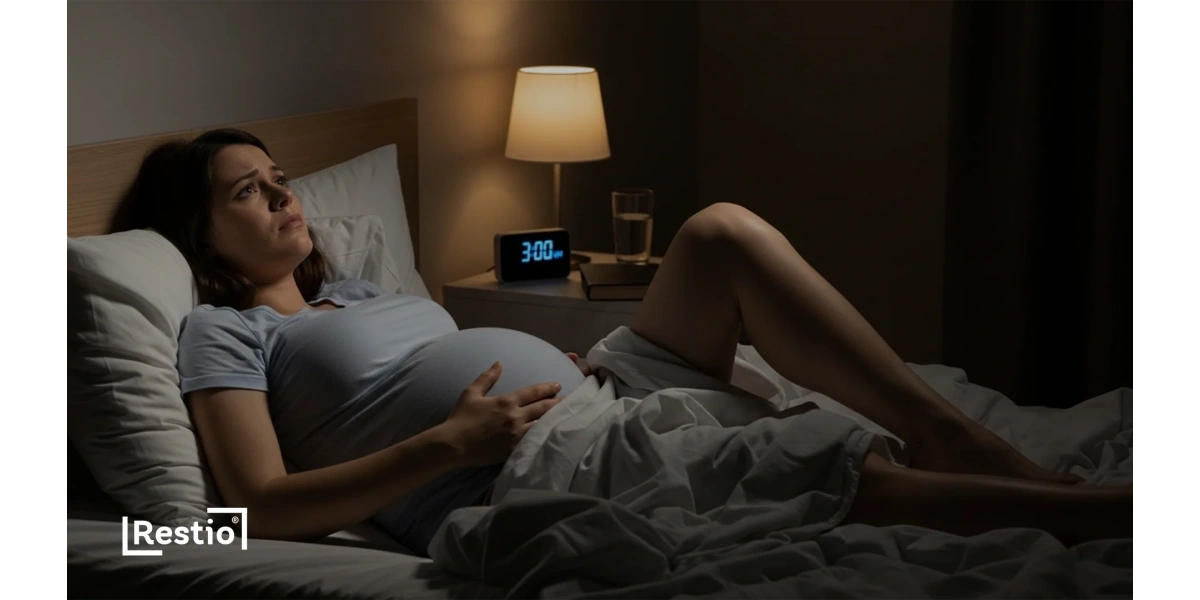
During pregnancy, Restless Legs Syndrome (RLS) can manifest through symptoms such as a sensation of fidgeting or restlessness in the legs or feet and an urge to move them. This article discusses why RLS may become more pronounced during pregnancy, the differences between RLS and cramps, the importance of assessing ferritin and iron levels, and supportive routines that can be practiced both day and night.
This article explores the causes of the discomfort associated with Restless Legs Syndrome (RLS)—which tends to intensify in the evening and at night—and examines how targeted pressure on the soles of the feet can influence sensory perception. It explains concepts such as mechanical pressure, sensory stimulation, and perception modulation, while clearly outlining the operating principles of Restio’s T-Ped approach.
The article explores why Restless Legs Syndrome (RLS) is considered to have a neurological origin and why symptoms may fluctuate throughout the day. It explains factors such as dopamine signaling, iron stores, circadian rhythm, and rest, while outlining how a neuro-orthopedic support approach can be integrated into daily routines and highlighting Restio’s role within this framework.
The article discusses the effects of hot and cold applications for Restless Legs Syndrome (RLS), noting that these effects can vary from person to person. It covers when methods such as hot showers, warm foot baths, and cool compresses might be preferred, explains why extreme heat or cold can cause discomfort, and outlines a simple, customizable temperature-based routine for use before sleep. Additionally, it explains how Restio can serve as a drug-free supplement to a nighttime routine.
Many people with Restless Legs Syndrome (RLS) report that their symptoms become more pronounced during the evening and night. This is not a coincidence; it is linked to the body’s “internal clock” (circadian rhythm) and the natural fluctuations of certain brain chemicals throughout the day.
The article addresses five common misconceptions that can lead to Restless Legs Syndrome (RLS) being confused with conditions such as cramps, numbness, or burning sensations. It clearly explains the temporary relief provided by movement, the worsening of symptoms in the evening and at night, the importance of iron markers like ferritin and transferrin saturation, and supportive options that can be incorporated into a nighttime routine.
It is explained that the term "grumpy leg" (huysuz bacak) used in Google searches actually refers, in most cases, to Restless Legs Syndrome (RLS). The article discusses the primary symptoms of RLS, the differences between the condition and muscle cramps, triggers such as sleep patterns and stimulants, the importance of iron stores, and simple supportive strategies that can be implemented in daily life.
The article explores how stress and anxiety can affect the symptoms of Restless Legs Syndrome (RLS) and how the stress–insomnia–RLS cycle can develop. It offers practical suggestions for managing daily movement breaks, caffeine intake, evening routines, and sleep patterns, as well as for monitoring iron levels and personal triggers.
The phenomenon where a muscle suddenly turns rock-hard and causes intense pain just as one is about to fall asleep is what most people call a "cramp." Restless Legs Syndrome (RLS), on the other hand, presents a different pattern...
Restless Legs Syndrome (RLS) is a condition characterized by sensations in the legs that are difficult to describe and an urge to move them, occurring particularly during rest and in the evening or night hours.
Does magnesium deficiency affect RLS? Evidence-based summary: symptoms, nutritional sources, supplementation forms, safe usage, and tips for consulting a physician.
How can Restless Legs Syndrome (RLS) be managed? Evidence-based methods to alleviate symptoms: sleep hygiene, trigger management, exercise, and physician-guided treatment options.
A comprehensive guide explaining the relationship between iron deficiency and Restless Legs Syndrome (RLS), covering symptoms, ferritin targets, treatment, and lifestyle recommendations.