





Restless Legs Syndrome (RLS) in Pregnancy
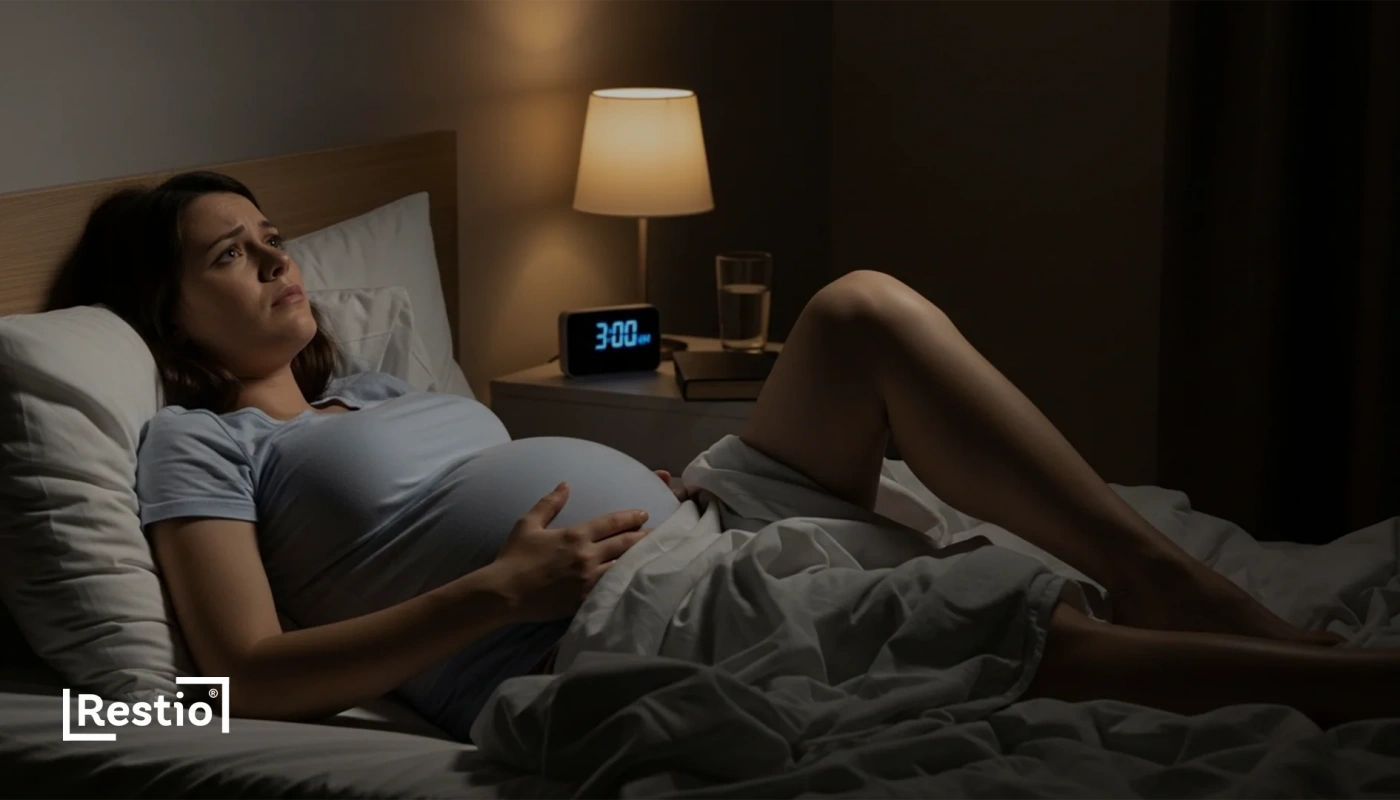
- Are You Experiencing a Feeling of Restlessness in Your Legs or Feet During Pregnancy?
- Why May It Be More Common During Pregnancy?
- Symptoms That May Suggest RLS
- Can It Be Confused With Leg Cramps?
- Why Do Ferritin and Iron Levels Come Into the Discussion?
- Supportive Routine Before Bedtime
- Things to Consider During the Day
- Frequently Asked Questions (FAQ)
Disclaimer: This content is not medical advice. Symptoms during pregnancy may vary from person to person; the information provided is for general awareness purposes only.
Are You Experiencing a Feeling of Restlessness in Your Legs or Feet During Pregnancy?
During pregnancy, some people may experience sensations such as restlessness in the legs or feet, an inability to keep still, or an urge to get up and walk around, particularly while resting. This pattern may sometimes be associated with Restless Legs Syndrome (RLS). A common feature of RLS is that symptoms tend to become more noticeable during periods of rest and may temporarily improve with movement.
Why May It Be More Common During Pregnancy?
Many physiological changes occur in the body during pregnancy. Some of these changes may contribute to RLS-related symptoms becoming more noticeable. For example, iron requirements may increase, which is why evaluating iron stores such as ferritin may be considered important in some approaches. Changes in sleep patterns, frequent nighttime awakenings, and increased periods of rest during the day may also contribute to sensations being noticed more strongly.
An important point to remember is that the same sensations are not experienced in the same way by everyone during pregnancy. One person may experience mild restlessness, while another may experience discomfort that interferes with sleep. Recognizing the symptoms can therefore make it easier to understand the situation more accurately.
Symptoms That May Suggest RLS
When discussing RLS, three characteristics are commonly considered together:
- Symptoms may primarily begin while resting or lying down.
- Temporary relief may occur with movement, such as taking a short walk or changing position.
- Symptoms may become more noticeable in the evening and at night.
These characteristics can help people searching for "restless legs syndrome during pregnancy" describe the symptoms they are experiencing more clearly. In some people, symptoms may fluctuate, with one night being mild and the following night being more noticeable.
Can It Be Confused With Leg Cramps?
Yes, it can. This is because leg cramps are also commonly experienced during pregnancy. However, the nature of the sensation may be different:
- Leg cramps are generally described as sudden muscle contractions and tightening; pain may be prominent.
- With RLS, an urge to move the legs or feet may be more prominent, and temporary relief may occur with a short walk or a change in position.
In other words, a cramp is often described as the "muscle suddenly locking up," whereas RLS is often described as a sensation that increases while staying still and temporarily eases with movement.
Why Do Ferritin and Iron Levels Come Into the Discussion?
The reason iron stores, particularly ferritin, are frequently mentioned in RLS-related content is that iron requirements may increase during pregnancy. This does not mean that "everyone necessarily has an iron deficiency." However, some clinical approaches emphasize evaluating iron stores. Planning should always be individualized.
Supportive Routine Before Bedtime
Because sleep can already change during pregnancy, an evening routine that is "low effort" and sustainable may be more comfortable for many people. For example:
- Gentle stretching may be considered.
- A warm shower or warm foot bath may feel relaxing.
- Reducing screen exposure late at night may make it easier to transition into sleep.
- Keeping sleep times as regular as possible may be helpful.
Note: A safe exercise plan during pregnancy varies according to individual circumstances. The appropriate level of physical activity should be determined according to your healthcare professional's recommendations.
Things to Consider During the Day
Some people report having a more comfortable evening when they make small adjustments during the day. The following may be helpful:
- Breaking up long periods of sitting and taking short walking breaks.
- Limiting caffeine consumption later in the day.
- Maintaining adequate fluid intake.
- Keeping a simple symptom journal, including when symptoms increase, how they change with movement, and how the day went overall.
The purpose of this journal is not to keep a "perfect record," but simply to help identify personal triggers more clearly.
Restio is a drug-free orthopedic support designed to be worn on the foot, developed to help relieve symptoms associated with RLS. With its specific design and structure, it applies gentle pressure to the abductor hallucis and flexor hallucis brevis muscles of the foot, which may help minimize symptoms and support sleep quality. It can be used practically when you feel an episode coming on or during an episode.
Unisex: Size I (35–39) & Size II (39–46). (Choose according to compatible foot size and width.)
Explore the Restio product page →
Disclaimer: Restio is not a treatment method; results may vary from person to person. This content is not medical advice.
Frequently Asked Questions (FAQ)
At what time of day may RLS symptoms become more noticeable during pregnancy?
Symptoms are often reported to become more noticeable in the evening and at night. Increased periods of rest may also make them easier to notice.
How can leg cramps and RLS be distinguished?
Leg cramps are generally described as sudden muscle contractions and tightening. With RLS, an urge to move may be more prominent, and temporary relief may occur with a short walk or a change in position.
Can there be a relationship between iron/ferritin and RLS during pregnancy?
Iron requirements may increase during pregnancy. Some guidelines and clinical approaches emphasize evaluating iron stores such as ferritin.
What can a supportive routine include?
Gentle stretching, a warm shower or foot bath, reducing late-night screen exposure, and maintaining regular sleep times may be helpful for some people.
